

3 quick tips for styling art
There's a quiet kind of confidence that comes from walking into a room where every surface feels intentional: nothing crowded, nothing bare, everything just right. More often than not, that feeling traces back to one deceptively simple trick: the triangle method. It's the same principle stylists and designers reach for again and again when arranging art and objects above a dresser or console, because it works almost every time, on almost any surface. If you've ever wondered how to turn a flat, awkward stretch of wall above your furniture into something that feels curated rather than accidental, this is the technique to learn.
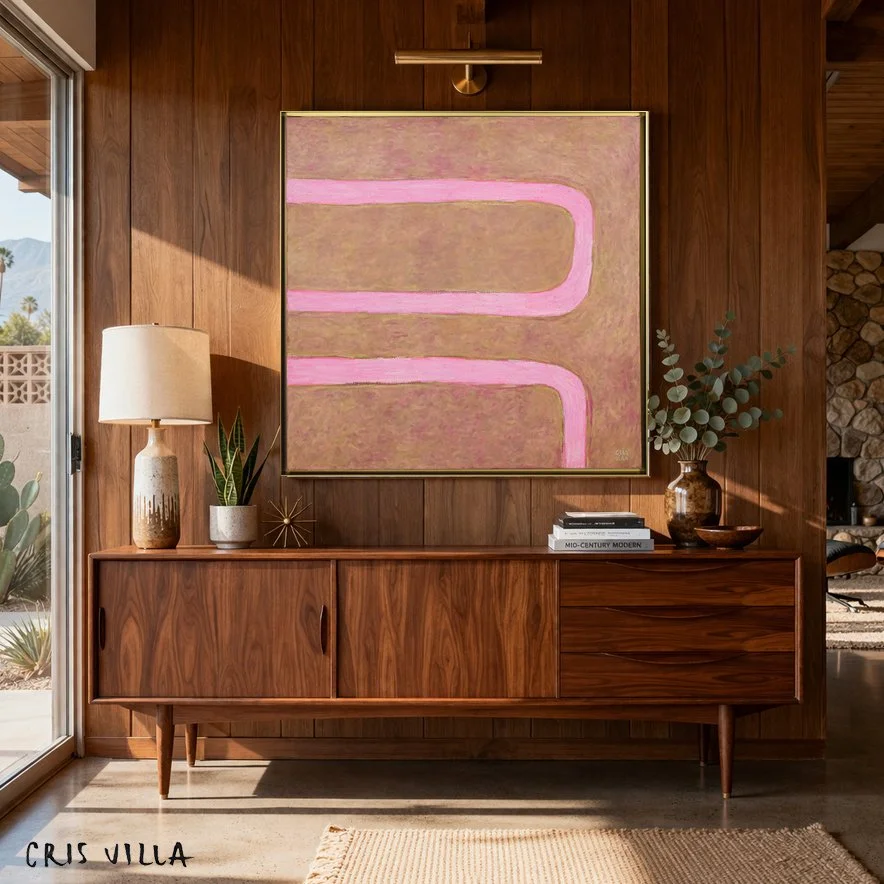
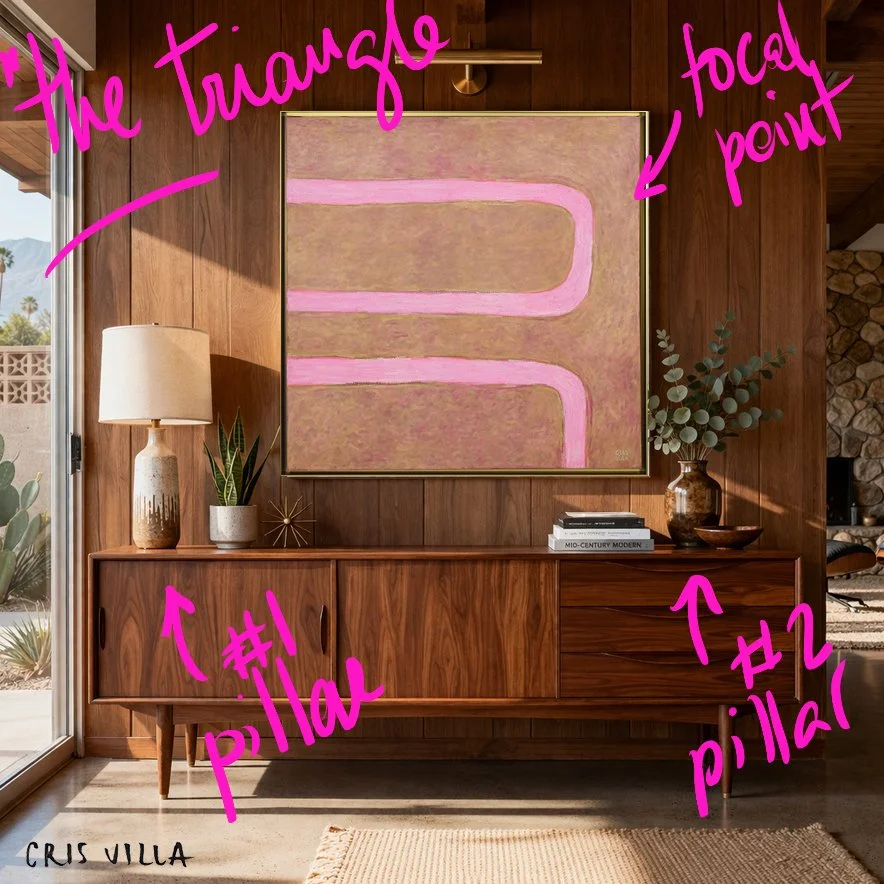
The Triangle Method: Styling art above a console or dresser
One of the most reliable formulas for styling or arranging art above a dresser or console. The idea is simple: center the art and build a visual triangle using three (or more) elements of different heights, widths and textures (for example, a plant, a ceramic object, books, etc.)
The triangle method works great on mantels, sideboards and gallery walls.
The perfect height
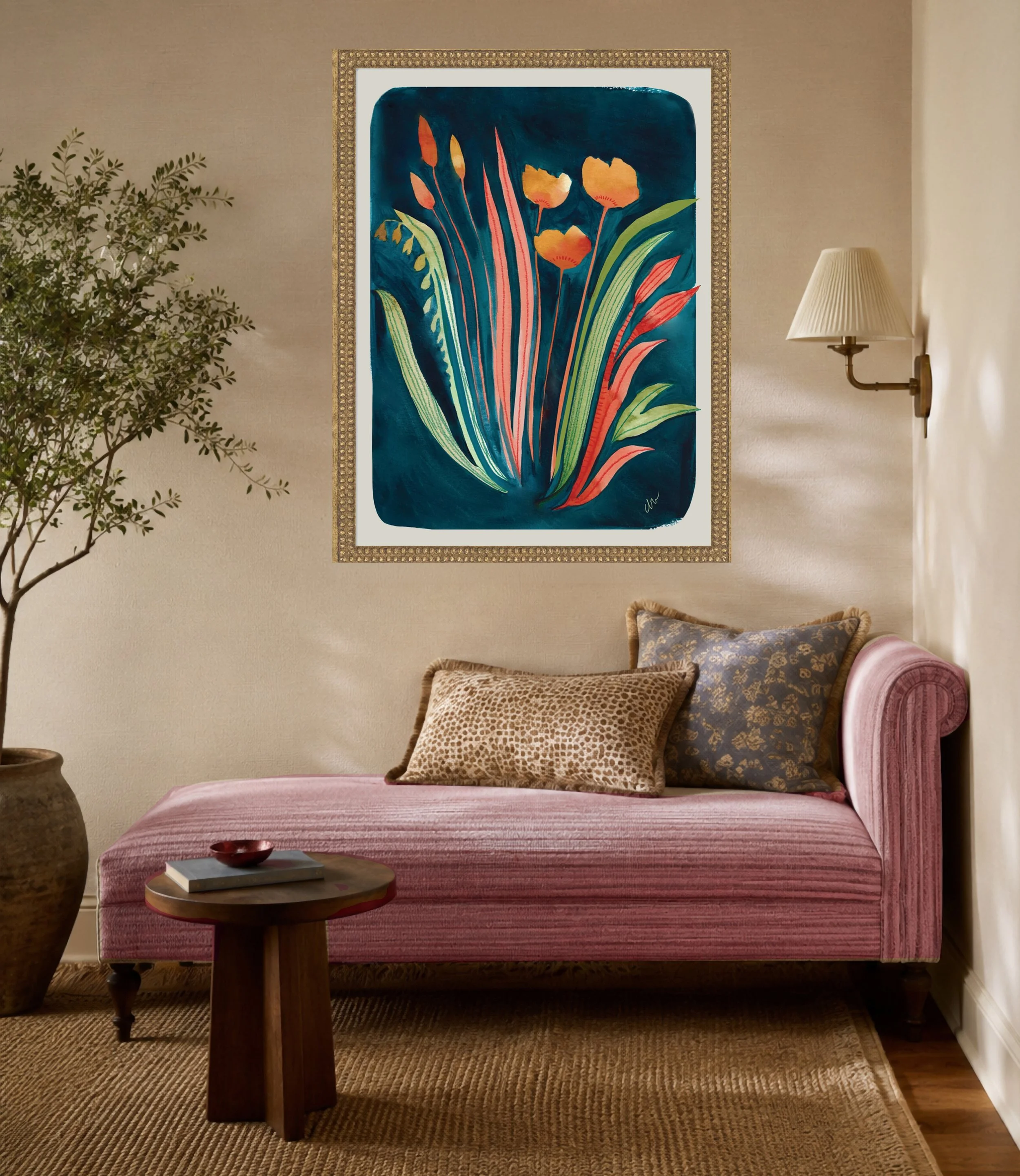
Height matters; as a general rule, the center of your art piece should be at around 57” from the floor (roughly eye level). That way, it feels balanced when you are standing near or glancing at it from across the room.

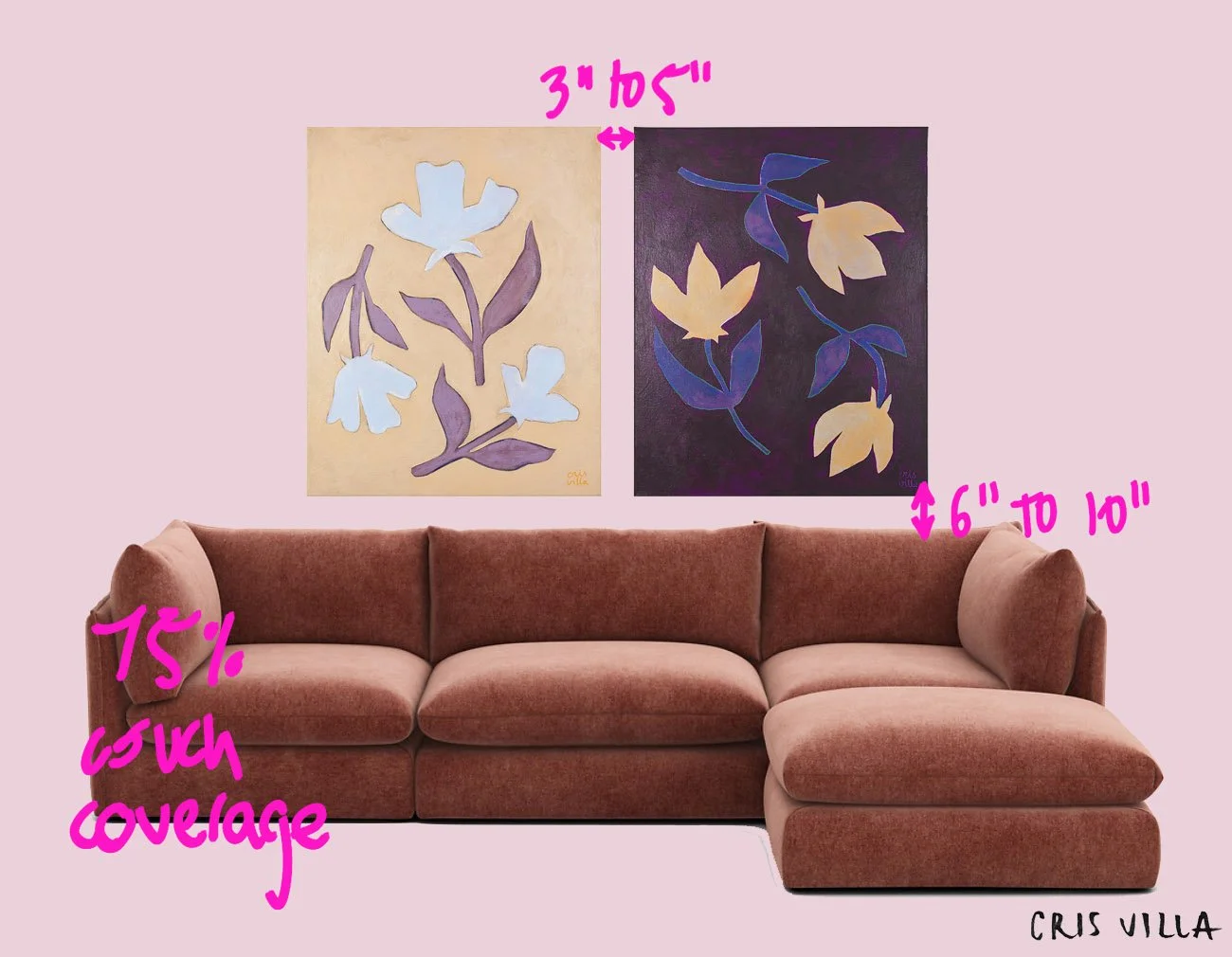
Above the couch
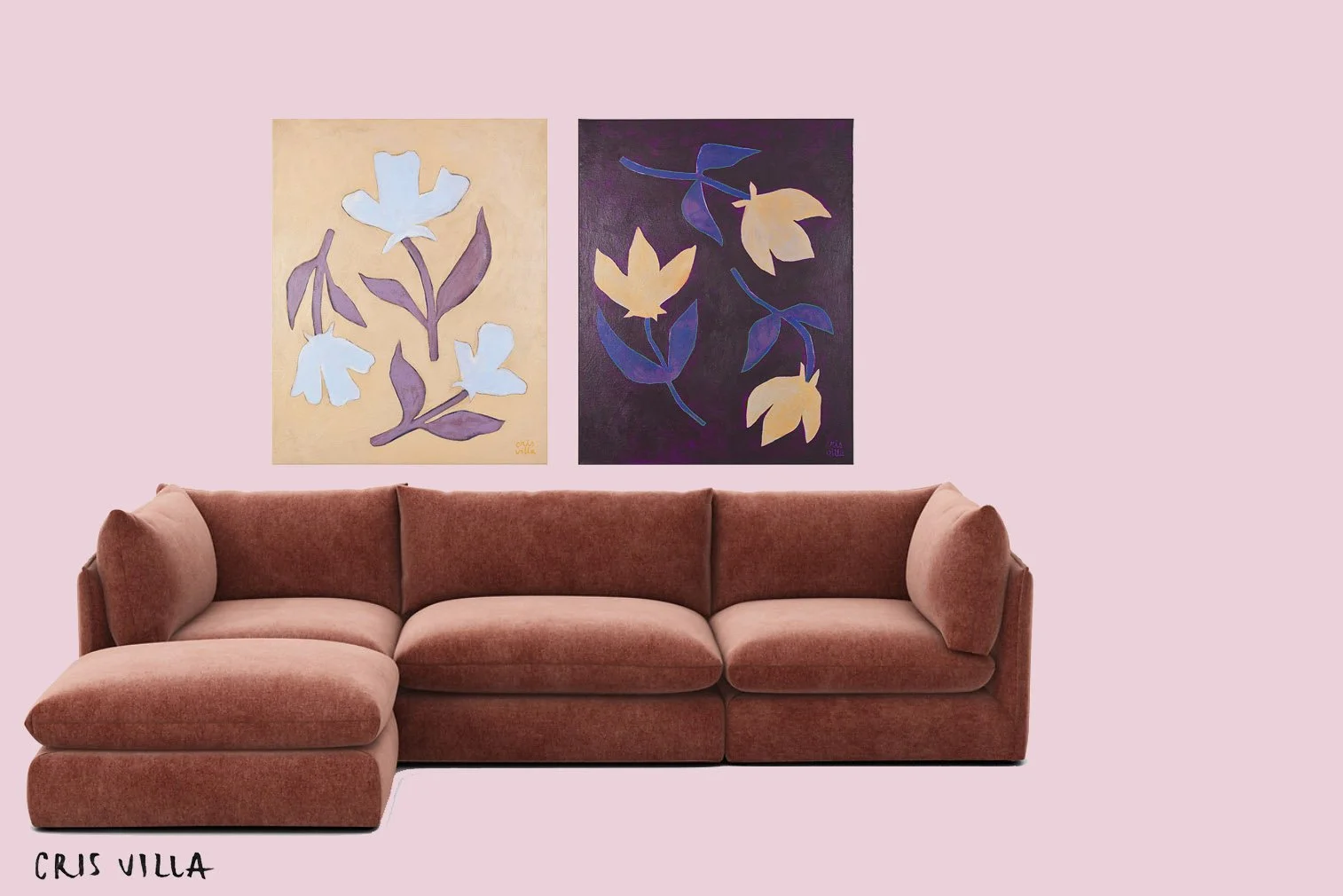
A good starting point is to leave about 6 to 8 inches of breathing room between the top of the couch and the bottom of the frame. For width, your art should span roughly two-thirds to three-quarters of the sofa's width, so it feels anchored to the piece below it rather than floating awkwardly above it. A single oversized piece creates a bold, gallery-like focal point, while a triangle or grid of smaller works adds more movement.
Bringing It All Together
At the end of the day, styling art well comes down to a handful of simple, repeatable principles rather than natural talent or an expensive eye. The triangle method gives your arrangement structure and movement, the 57-inch guideline keeps your pieces at a height that feels naturally balanced to the eye, and knowing how to adapt these rules — whether you're working above a dresser, a console, or a couch — means you can walk into any room and know where to start. Perfection isn't really the goal here; a good eye and a tape measure will get you most of the way there. Once you've got the fundamentals down, the rest is just practice, a level, and the confidence to step back, look, and adjust.